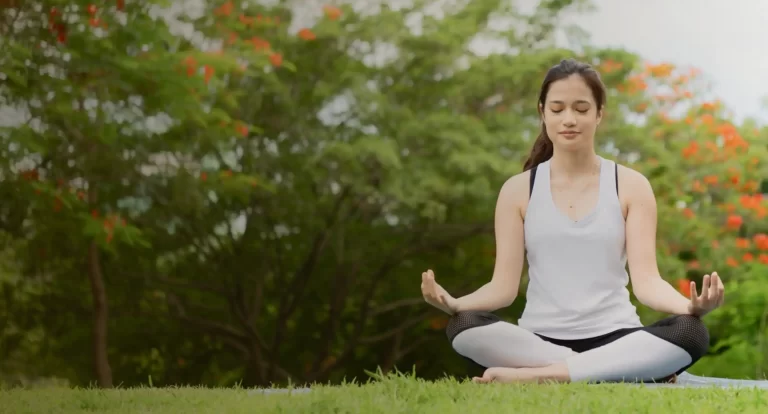
Somewhere in India right now, a 58-year-old woman is touching her toes for the first time in two decades.
A 65-year-old man who was told his joints were “too far gone” is holding Warrior II for thirty seconds — pain-free. A 45-year-old with a desk job and chronic stiffness is sleeping better than she has in years.
None of them went to a gym. None of them started a crash programme. They simply started yoga — and kept going. This is exactly what International Yoga Day 2026 is celebrating.
OFFICIAL UN THEME · 2026
Yoga for
Healthy Aging
Declared by the United Nations, the 2026 theme shines a light on one of yoga’s most underrecognised gifts — helping people age with strength, dignity, and joy.
The world’s population is aging faster than at any point in history. By 2030, one in six people on earth will be over 60. India alone is home to over 150 million people above the age of 60 — a number expected to double by 2050.
The 2026 theme is a direct response to this reality. Yoga is not a young person’s practice — it never was. The ancient texts described it as a lifelong path, one that becomes richer and more essential as the body and mind move through the decades.
What is International Yoga Day?
International Yoga Day (also known as World Yoga Day) is observed every year on June 21 — the summer solstice, the longest day of the year in the Northern Hemisphere.
It is a United Nations-recognised global event dedicated to raising awareness about the physical, mental, and spiritual benefits of yoga. First celebrated in 2015, it is now observed in over 190 countries with mass yoga sessions, community events, and online classes.
The history of International Yoga Day
How it began
On September 27, 2014, Prime Minister Narendra Modi addressed the United Nations General Assembly and proposed June 21 as International Yoga Day, calling yoga “an invaluable gift of India’s ancient tradition.”
The UN responded with historic speed. On December 11, 2014, the General Assembly adopted Resolution 69/131 with a record 177 co-sponsoring nations — one of the fastest resolutions in UN history.
The first International Yoga Day — 2015
The inaugural celebration made history. Over 35,000 people gathered at Rajpath in New Delhi to perform 21 asanas over 35 minutes — entering the Guinness World Records for the largest yoga class at a single venue and the most nationalities participating simultaneously.
Every theme, year by year
2015
Yoga for Harmony and Peace
2020
Yoga at Home, Yoga with Family
2023
Yoga for Vasudhaiva Kutumbakam
2024
Yoga for Women Empowerment
2025
Yoga for a Healthy Planet
2026
Yoga for Healthy Aging★ This year
Why June 21? The summer solstice
June 21 is the summer solstice — the day the sun reaches its highest point in the sky, marking the longest day in the Northern Hemisphere.
In yogic tradition, the solstice is deeply auspicious. Ancient texts describe it as a time of heightened spiritual energy — a natural threshold. Beginning or renewing a practice on this day carries symbolic meaning that spans thousands of years. It is, in every sense, the perfect day to start something new — at any age.
What “Yoga for Healthy Aging” means in practice
Aging is not a problem to be solved. It is a natural process — and yoga’s role is not to fight it, but to help us move through it with grace. Here is what the research and ancient wisdom both confirm.
- Improved flexibility — reduces stiffness in joints and muscles that tighten with age.
- Stronger muscles — weight-bearing poses build functional strength without high impact.
- Better balance — balance poses activate proprioception, dramatically reducing fall risk.
- Joint health — gentle movement lubricates joints and eases arthritis symptoms.
- Spinal health — maintains mobility and counters the compression of aging.
- Reduced cortisol — chronic stress accelerates aging; yoga is one of the best regulators known.
- Better sleep — restorative yoga activates the parasympathetic nervous system.
- Sharper focus — breathwork and meditation improve attention and memory.
- Lower anxiety — especially significant when navigating retirement, loss, or health challenges.
- Sense of community — shared practice brings purpose and connection in later years.
A 2024 study in the Journal of Aging and Physical Activity found that adults over 60 who practised yoga 3+ times a week showed 40% better balance scores and markedly better cognitive performance after just 12 weeks.
5 yoga poses for healthy aging
These five poses are chosen specifically for the theme — each addresses a key area of aging well: balance, joint mobility, spinal strength, and calm. Practice them on June 21, or any day.
1
 📐 Recommended: 700 × 500 px (portrait, 3:2)
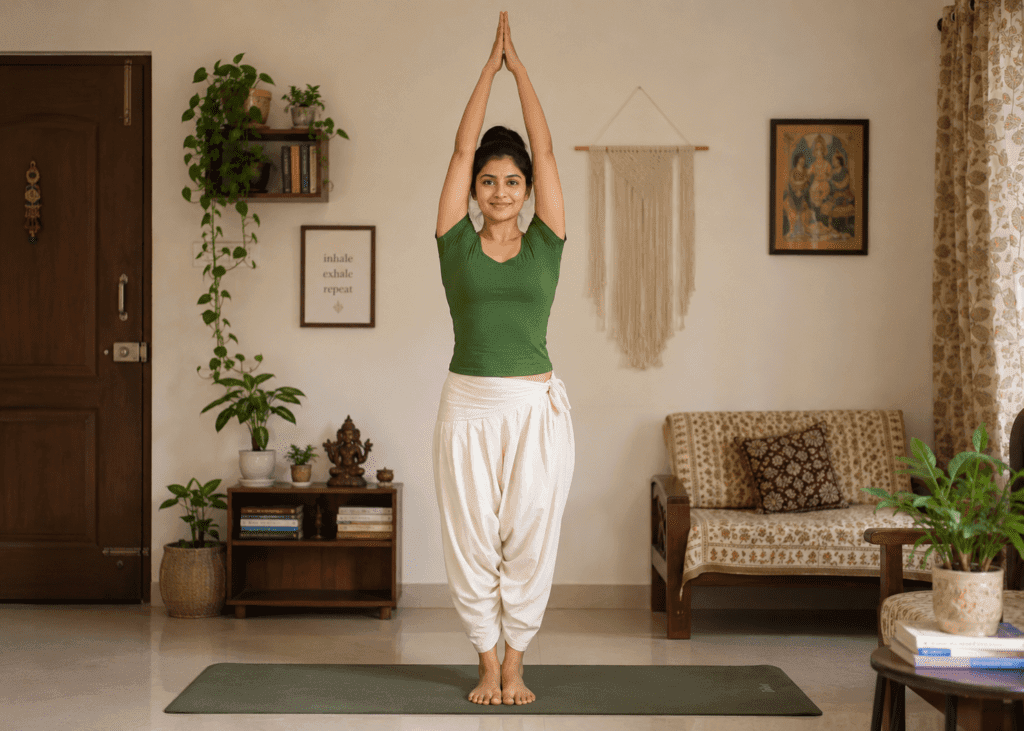
 Tadasana
Mountain Pose · Posture & Presence
How to do it
Stand with feet together or hip-width apart. Ground through all four corners of your feet, lengthen the spine, relax the shoulders, and breathe deeply for 8 slow counts.
Why it matters for aging
Poor posture is one of the most common — and preventable — issues in aging. It affects breathing, digestion, confidence and pain. Tadasana trains the nervous system to know what upright alignment feels like.
Modification
Practice with your back gently against a wall for feedback and support.
Common mistake
Over-arching the lower back. Think “lengthen” rather than “push chest out.”
2
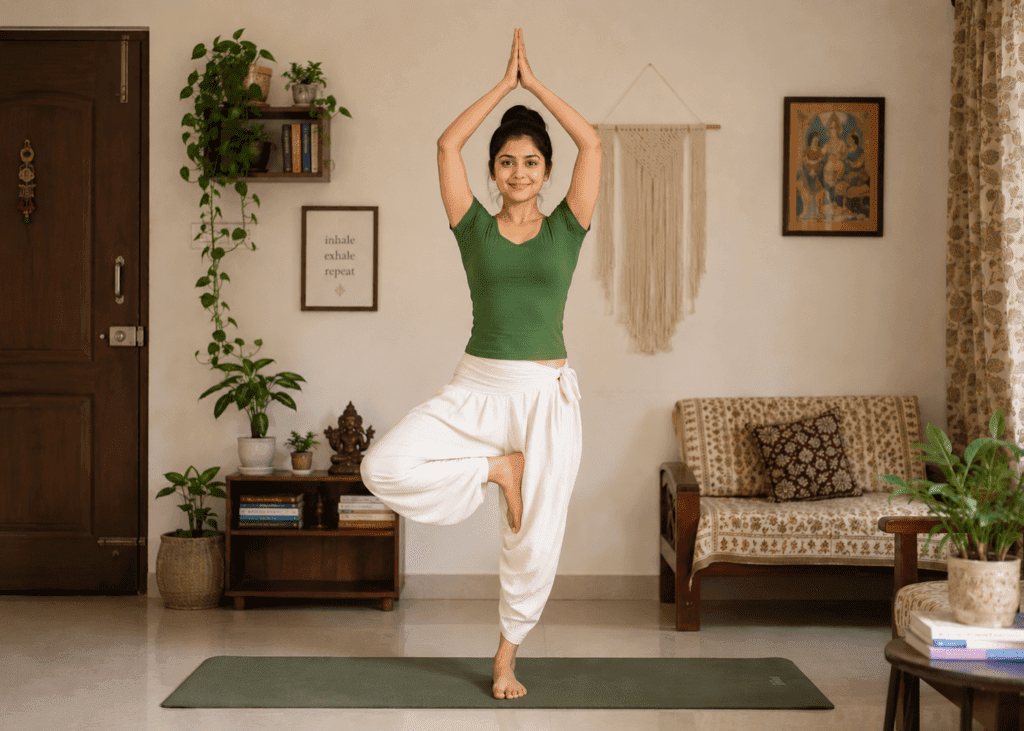
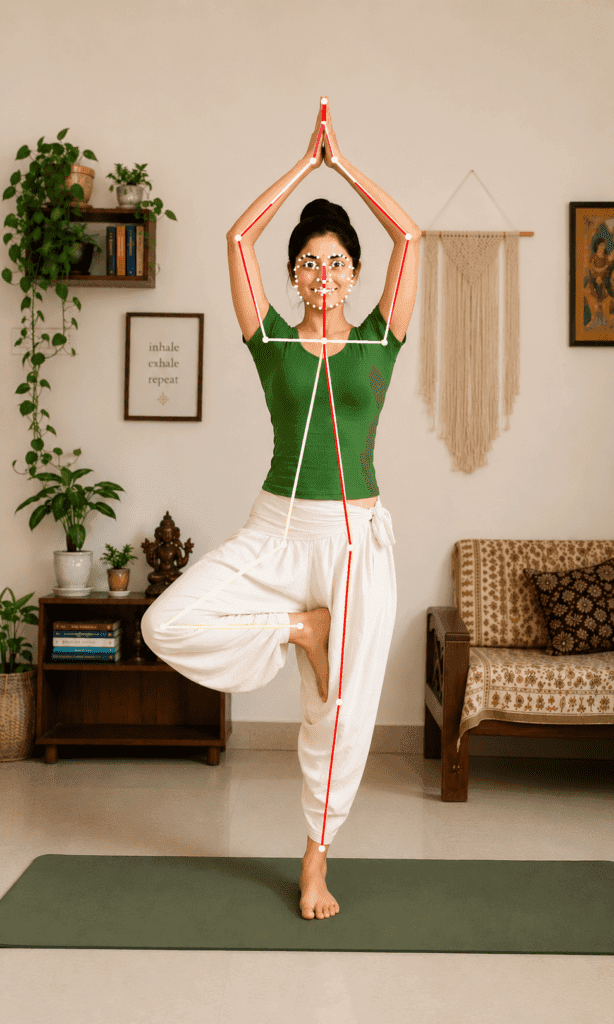
📐 Recommended: 700 × 500 px (portrait, 3:2) Vrikshasana
Tree Pose · Balance & Bone Strength
How to do it
Stand on one leg. Place the sole of your other foot on your inner calf or thigh — never on the knee. Hands at chest in Namaste or raised overhead. Hold 5 breaths, then switch sides.
Why it matters for aging
Falls are the leading cause of injury-related death in adults over 65. Balance training is the single most effective intervention — and Tree Pose is one of the best balance exercises in existence.
Modification
Keep the toes of the raised foot lightly touching the floor as a “kickstand” while you build confidence.
Common mistake
Staring at a moving object. Fix your gaze (drishti) on one still point at eye level.
3
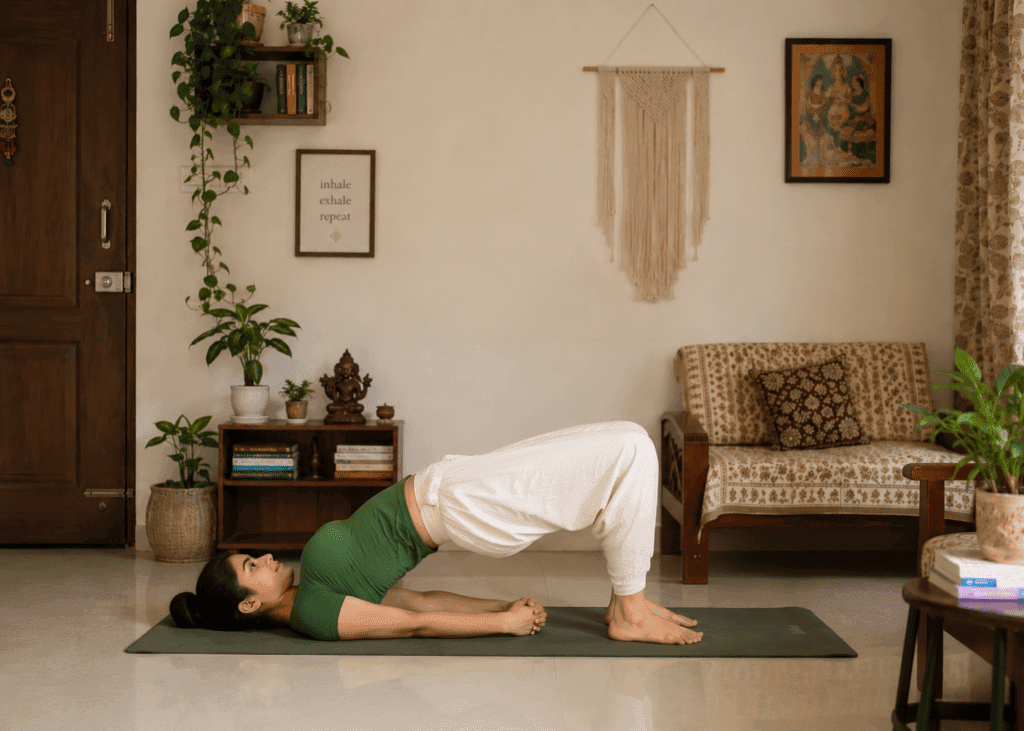
📐 Recommended: 700 × 500 px (portrait, 3:2) Setu Bandhasana
Bridge Pose · Spine, Hips & Energy
How to do it
Lie on your back, knees bent, feet flat and hip-width apart. Press into your feet and lift your hips toward the ceiling. Interlace your fingers beneath you. Hold 5–8 breaths, then lower slowly.
Why it matters for aging
Bridge strengthens the lower back, glutes and hamstrings — the muscles most responsible for lower back pain and hip stability in aging adults. It also opens the chest and counters forward-curved posture.
Modification
Place a yoga block under your sacrum for a restorative, supported version that requires no effort.
Common mistake
Letting the knees splay outward. Keep them tracking over the second toe throughout.
4
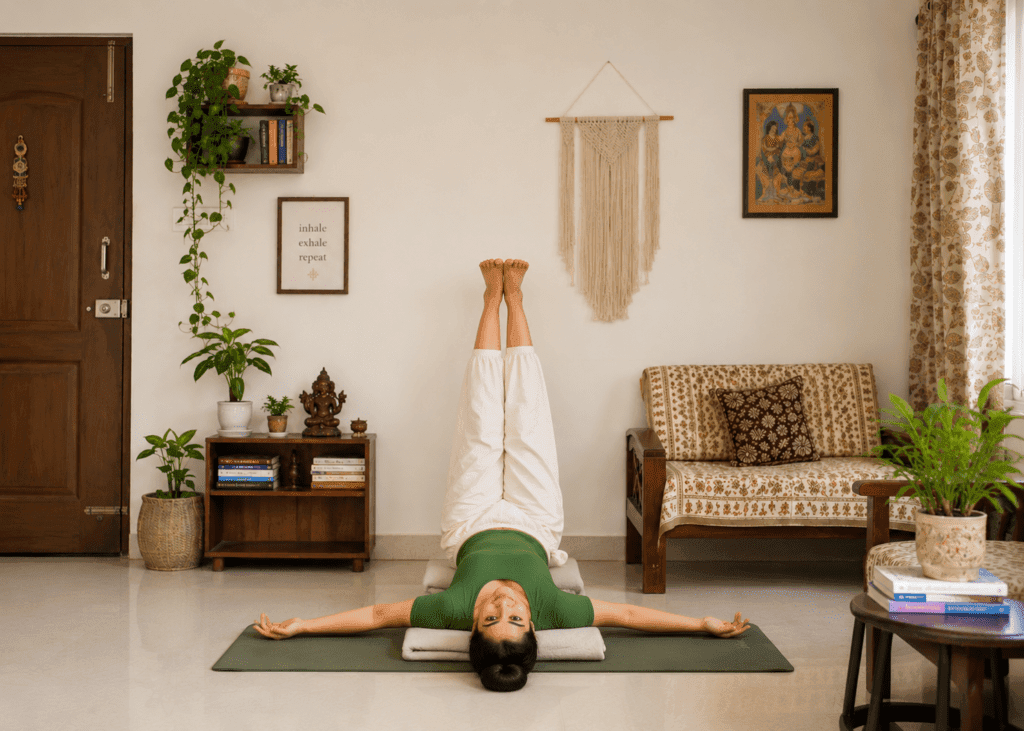
📐 Recommended: 700 × 500 px (portrait, 3:2) Viparita Karani
Legs Up the Wall · Circulation & Rest
How to do it
Sit sideways close to a wall, then swing your legs up as you lower your back to the floor. Rest with legs vertical against the wall, arms open at your sides. Stay for 5–10 minutes.
Why it matters for aging
This gentle inversion reverses blood pooling in the legs, reduces swelling, calms the nervous system, and is deeply restorative for anyone managing fatigue, high blood pressure or insomnia.
Modification
Place a folded blanket under your hips for extra lift and comfort.
Common mistake
Forcing your sit bones flush against the wall. A small gap is perfectly fine — comfort is the goal.
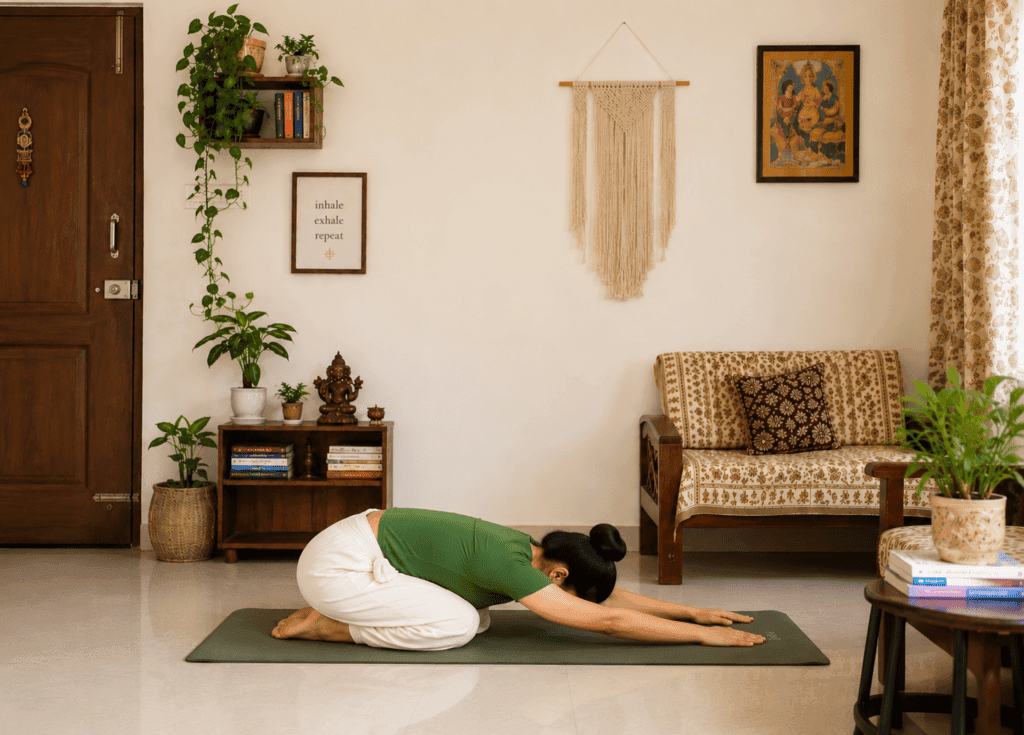
5
 📐 Recommended: 700 × 500 px (portrait, 3:2)
 Balasana
Child’s Pose · Release & Surrender
How to do it
Kneel and sit back on your heels. Fold forward, arms extended or resting alongside your body, forehead on the mat. Breathe slowly and deeply for 8–10 counts.
Why it matters for aging
Child’s Pose gently stretches the lower back, hips and thighs. More than that, it teaches something profound: that rest is not giving up. Knowing when to slow down is as important as knowing when to push.
Modification
Place a rolled blanket between your thighs and calves if sitting back on your heels is uncomfortable.
Common mistake
Holding tension in the shoulders. Let everything release — this is the pose of letting go.
Who is this for?
Yoga for healthy aging isn’t a single age bracket — it meets you wherever you are.
40s
The whisper years
The body begins to whisper — stiffness, dipping energy, lighter sleep. Yoga addresses all of it before it becomes loud. Starting now is the best investment in your 60s and 70s.
50s–60s
Where it shows
This is where yoga’s benefits become most tangible — joint mobility, hormonal balance (especially post-menopause), bone density and heart health all respond to regular practice.
70+
Never too late
Chair yoga and gentle floor sequences make practice fully accessible regardless of mobility. Balance, clarity, community and purpose are especially powerful in this decade.
How to celebrate International Yoga Day 2026
Whether June 21 is your very first class or your thousandth, there’s a way to make it meaningful.
If you are new to yoga
- Do your very first class on June 21 — make the theme personal
- Start with the 5 poses above, holding each for 5–8 breaths
- Join a live guided class so you have real-time instruction from day one
If you already practice
- Dedicate your practice to an elder in your life
- Try a pose you’ve been avoiding — bridge and balance poses are the most needed
- Journal for 5 minutes: what does aging well mean to me?
For the community
- Introduce a parent or older relative to yoga today
- Organise a gentle session for seniors nearby
- Share the 2026 theme with #YogaForHealthyAging
Yoga and AI in 2026 — aging well, at home
One of the greatest barriers for older adults taking up yoga is a legitimate fear: incorrect alignment in poses like Bridge, Warrior or Tree can stress the wrong joints — especially in bodies already managing arthritis or reduced flexibility.
In 2026, AI-powered yoga platforms have made this concern addressable without commuting to a studio or affording private sessions.
HEALTHY AGING AT HOME, CORRECTLY
33 landmarks. 30 frames a second. On-device.
The biggest barrier for older adults is the fear: “what if I do it wrong and hurt myself?” Yogain’s real-time AI tracks your joints and corrects a splaying knee or rounded spine in the moment — not three weeks later when the strain has built up.
33 landmarks
30 fps
On-device

📐 Recommended: 600 × 1000 px (tall portrait 9:16)
LIVE
96%
Tree Pose · hold 5 breaths2 / 5
START ON JUNE 21 · 10 DAYS FREE
Begin a practice that grows with you.
Live classes every morning, afternoon and evening. Real-time AI posture correction. A certified instructor who understands bodies at every stage of life.
Start my free trial
10
day free trial
Live on June 21
Real-time AI correction
Cancel anytime